
One day
A poem on my obsession and its consequence.
I always kept my books pristine
Never even wrote my name or a date.
I worried when someone else touched them,
When a page got folded in.
They lay on my mahogany book shelf, waiting
Leaning on one another in their stupor
While I made my wish lists
And talked about reading them, one day.

Years went by thus,
The shelf was full.
One day, I was no more in the world,
But the books didn't know that.
An old man's forgotten cravings--
They held onto their spines
Yellow skins crumbling away,
Unfulfilled.

A child's hand reached in, one day
They tumbled headlong into tiny arms
They showered sawdust--
All they had.
Opened themselves up--
All they could.
A touch, a flip, a scribble--
All they wanted.

He drew on them
Stacked them into a castle
Flipped them like hot pancakes
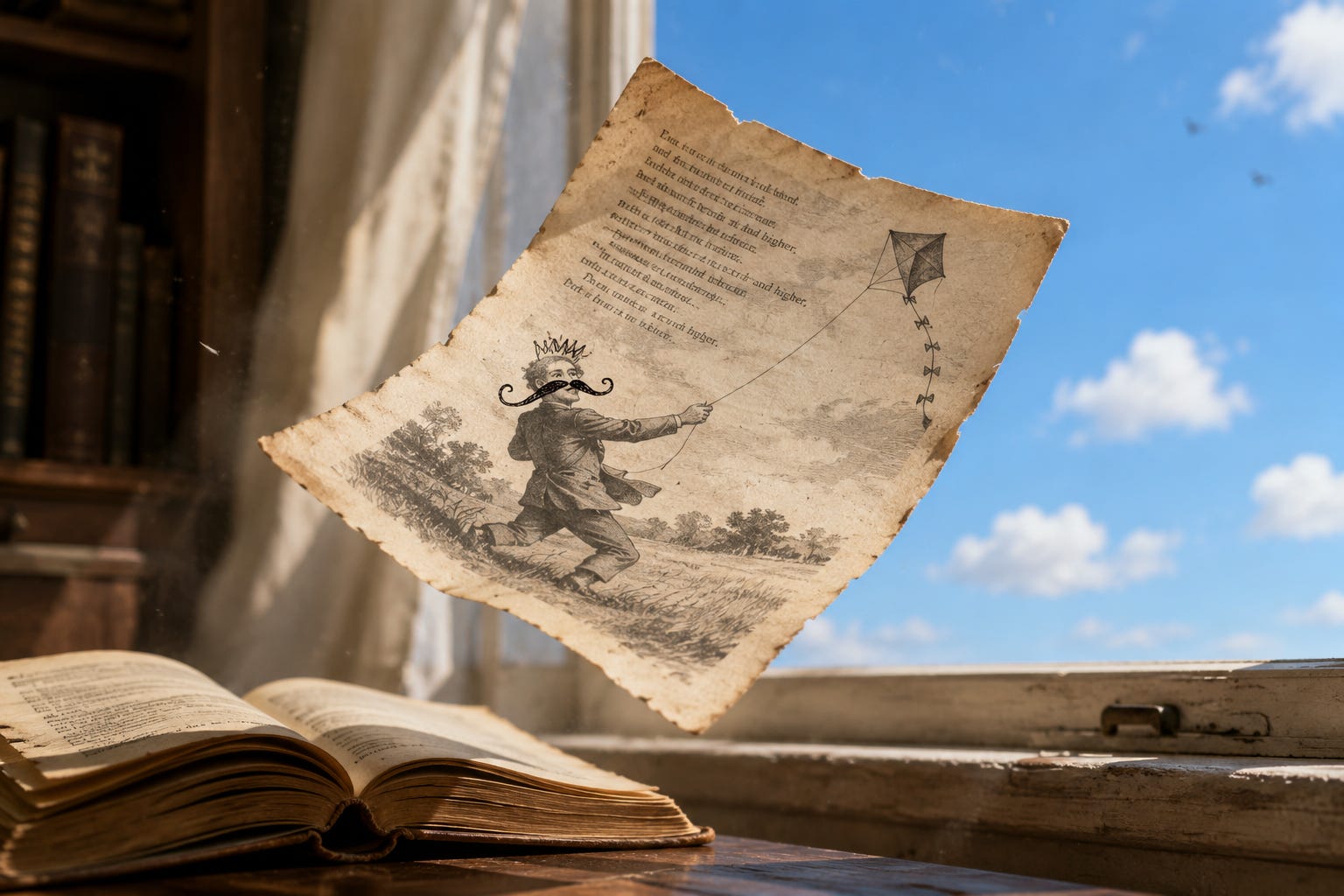
Doodled moustaches--
Handlebars and walruses
And some toothbrushes,
On men and women alike.

It was not the old man--
They could tell (if they could).
Yet they loved the boy,
In his capricious play
He had loved them more in one day
Than I ever could obsess.
He may read them, or maybe not
It would still be enough.

The boy, a man searching,
Read his grandfather's books.
While I had led a life wanting more
They had always existed for others.
I was null, voided by my own self, so
He never found me in there
But he started filling in my gaps, in the margins
And looked at himself, one day.
"Talked about reading them, one day."
That line stopped me. The old man's whole life is in it.
Buddhist teachers sometimes describe this as the difference between holding and touching. The man held the books, kept them pristine, treated them as objects to possess. The child touched them, drew on them, built castles. One was contact. The other was ownership.
There's a word in Zen for what the boy had: shoshin, beginner's mind. Not knowing the "right" way to treat a book, he couldn't do it wrong. The grandfather knew exactly how books should be treated, and that knowledge kept him at arm's length.
"He may read them, or maybe not. It would still be enough." That line feels like the whole teaching.
What do you keep pristine by never touching?